 Lying along the mighty Brahmaputra River, the Kaziranga National Park covers an area of about 430 sq. km. Its swamps and grasslands with tall thickets of elephant grass and patches of evergreen forest, support the largest number of rhino in the subcontinent. It was an alarming depletion in their numbers, due to hunting and poaching that led to the conservation of this area in 1926. In 1940, Kaziranga was declared a sanctuary. Though poaching still constitutes a major threat to the rhino population, the numbers of this species are fairly healthy. At Kaziranga, the open country makes wildlife viewing fairly easy. A day's outing is often sufficient for visitors to see most of the major species here. Lying along the mighty Brahmaputra River, the Kaziranga National Park covers an area of about 430 sq. km. Its swamps and grasslands with tall thickets of elephant grass and patches of evergreen forest, support the largest number of rhino in the subcontinent. It was an alarming depletion in their numbers, due to hunting and poaching that led to the conservation of this area in 1926. In 1940, Kaziranga was declared a sanctuary. Though poaching still constitutes a major threat to the rhino population, the numbers of this species are fairly healthy. At Kaziranga, the open country makes wildlife viewing fairly easy. A day's outing is often sufficient for visitors to see most of the major species here.
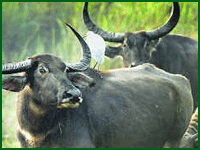
Elephants take them into the Park at dawn. As the mist lifts and the rising sun touches the hills in the distance, herds of barasingha and wild buffalo are to be seen in the marshes. The most ferocious bovine in the world, the massive wild buffalo is impressive and can weigh up to 915 kg. Rhinos browse unconcernedly as the visitors pass by and an occasional herd of elephants or wild boar is also sighted. The grasslands are raptor country and the crested serpent eagle, the Pallas fishing eagle and greyheaded fishing eagle can be seen circling over the marshes. The water-bird variety includes swamp partridge, bar-headed goose, whistling teal, the Bengal florican, storks, herons and even pelicans.
The park is famous for Indian one horned rhinoceros which can reach a height of over two metres and weigh more than two tonnes. The area was declared a game reserve in 1908 to save the one-horned rhino. The total number of rhinoceros in the park totals more than thousand which is 70 percent of the total population of this species in the country. A single horn of the rhino is worth exorbitant amounts of money. ( US $ 40,000 in 1995).
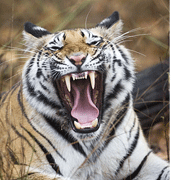
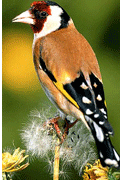
The park also has elephants, swamp or wild buffalo (Over 70% of the world population), swamp deer, hog deer, barking deer, sambar/ Hoolock gibbon, pythons, civet cat, wild boar and tigers. There is a rich variety of fresh water fowls, over 450 species of woodland and grassland birds of which 18 species are globally threatened. Birds like the egrets, pond herons, river tern, black necked storks, pelican, partridges, Bengal florican stork, pied horn bill, fishing eagle are found in abundance. The river here, has the gharial (fish eating crocodile) and dolphins.
|