For anyone who visits Corbett National Park, it sooner or later becomes an addiction. If you sit back and think about it, sometimes you wonder, why! Sightings of wildlife are much more difficult here than other parks in India. Then why does it lure you back time and again?! Is it the beautiful landscape and scenery? Is it the fact that you actually have to try and outwit the animals to get to see them? Is it the warmth of the people looking after the park? Or is it proximity to a major city serving as a hub? I guess the answer to the question is "all of the above".
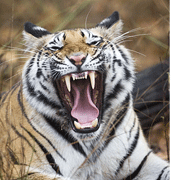
The magnificent Ramganga River flows through the entire length of the Park and little forest streams tumble through the ravines. While dense stands of sal cloak the higher ridges, mixed deciduous forests are found throughout the Park and over 110 varieties of trees, 51 species of shrubs and over 33 kinds of bamboo's and grasses are seen here. Corbett has the highest density of tiger in the country - approximately one every 5 sq. km. and it was here that the prestigious "Project Tiger" was launched in 1973.
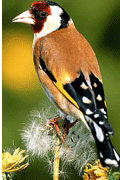
Four species of deer - hog deer,sambar, chital and barking deer and other prey like the wild boar, support the predator. Besides the tiger, Corbett is a haven for 50 mammals, 580 kinds of birds and 25 reptile species. The Park has elephants, the Himalayan black bear in the higher elevations, sloth bear, varieties of lesser cats, dhole the wild dog and an entire spectrum of colourful birds including water birds, pheasants, jungle fowl and the Indian hornbill.
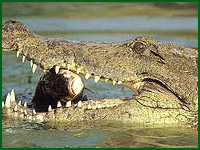
Basking along the banks of the Ramganga are the slender snouted gharial and the mugger or marsh crocodile. The river is rich in the magnificent mahaseer - a fine sporting fish prized by anglers, though angling is not permitted inside the National Park.
|